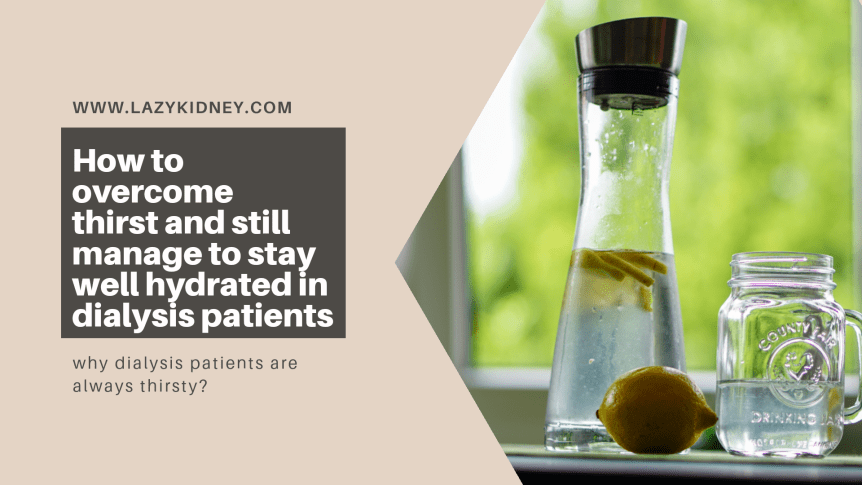
Thirst is one of the most powerful urges one can ever have. Especially in dialysis patients, Thirst if not handled in the right way might lead to Fluid Overload which always results in hypertension which damages the heart, causes swelling in arms and legs, puffiness of the face and sometimes breathlessness due to fluid accumulation in the lung cavity making dialysis treatment very difficult.
Why dialysis patients are always thirsty? Yes, dialysis patients feel thirstier due to many factors. Abnormal electrolyte levels such as high sodium concentration in blood, a large number of nitrogenous waste metabolites present in the body, high sugar level and psychological factors which make it very difficult to manage thirst in dialysis patients.
I’ve seen many doctors, dialysis technologist & nurse instruct the patient to consume less fluid instead of limiting salt in the diet. Salt is the actual culprit for fluid overload in dialysis patients. Instruct your patient to consume less salt in the diet; the aim of achieving less fluid weight will be easily achievable.
When we say dialysis patients should have control over their fluid consumption or limit their fluid intake, many people misunderstand it to “Dialysis patients are barred from drinking water”. No, it’s not true. A dialysis patient needs to be hydrated but not fluid overload. Understand the difference. A Renal dietitian by analyzing the patient and the patient’s residual renal function will prescribe the allowable amount of fluid that can be consumed in a day. The patient should be encouraged to follow the dietitian’s instructions and have a proper follow-up consultation with the doctor as well as renal dietitian which will make dialysis treatment very easy.
Here are some very helpful tips to stay hydrated under controlled fluid intake for dialysis patients.
- Limit salt and sugar in the diet
- Divide the prescribed fluid allowance into multiple manageable parts. For example: if the patient’s daily prescribed fluid allowance is 1 Liter. Divide the fluid allowance into multiple manageable parts like; Morning – 250 ml, noon – 250 ml, evening – 250 ml and in the night – 250 ml.
- Use a small glass to consume water
- Hard sugar-free candy will lubricate the mouth and help decrease thirst
- Use refreshing mouthwash. Refrigerate mouthwash to have a cold and more refreshing mouthwash.
- Chewing sugar-free gum helps to avoid thirst for a few minutes
- Use of mouth spray to avoid dry mouth. ½ cup lemon juice mixed with ½ cup of water in a spray bottle will come in handy to tackle dry mouth.
- Consuming frozen or cold fruit/vegetables
- Avoid staying out in the sun
- Control over blood sugar level is very important as high blood sugar will increase thirst
- Medications like antihypertensive, antihistamines, antibiotics, etc. will cause dry mouth so it is better to take these medications along with mealtime beverages, with apple sauce or with moist food.
- Consume fresh meat not smoked or cured. Avoid canned meat and many other canned condiments which are very salty and high with preservatives.
- Finally, keep a track of all the liquids that are consumed in a day and regular follow-up on psychological consultation which helps to tolerate and overcome thirst and improve the quality of life on dialysis.
Check out how the Renal dietitian makes dialysis treatment very easy for you.
 LazyKidney
Some people are using the dialyaste sodium up-to 145 to prevent hypotension while dialysis …this is also will lead the patient to have thirst in post HD ……one of the reason for fluid overload.
LikeLiked by 1 person
Yes Sheik you are right. Dialyzing at dialysate sodium upto 145 mEq will cause thirst post HD but if we utilze sodium profiling along with UF profiling to control blood pressure during HD, post HD thirst can be avoided.
LikeLike