
Anemia has intense effects on the cardiovascular system. Many of these effects have said to be improved or reversed following erythropoietin therapy.
Tag: Renal Replacement Therapy
Adverse Effects of Erythropoietin Therapy in Dialysis Patients

Majority of the reported complications associated with erythropoietin therapy are not due to the recombinant product but due to the resultant increase in hematocrit and blood viscosity.
Priming a Reuse Dialyser (Reprocessed Dialyser)
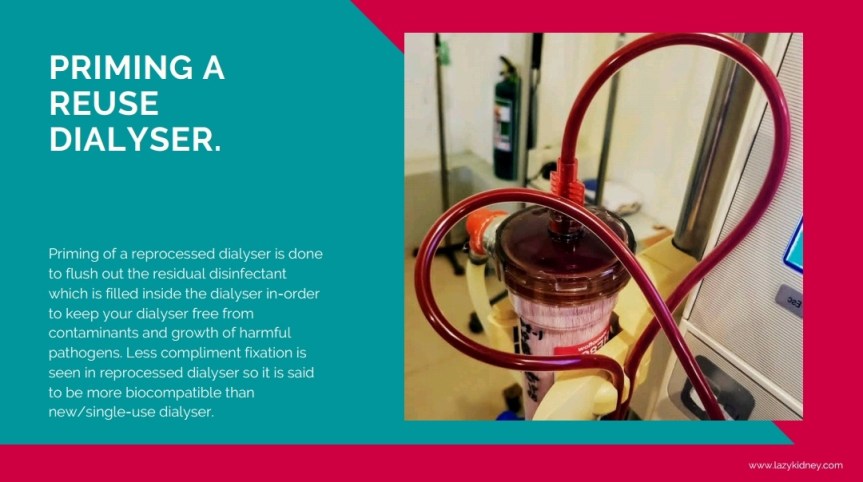
Priming of a reprocessed dialyser is done to flush out the residual disinfectant which is filled inside the dialyser in-order to keep your dialyser free from contaminants and growth of harmful pathogens. Less compliment fixation is seen in reprocessed dialyser so it is said to be more biocompatible than new/single-use dialyser.
Priming a New Dialyser
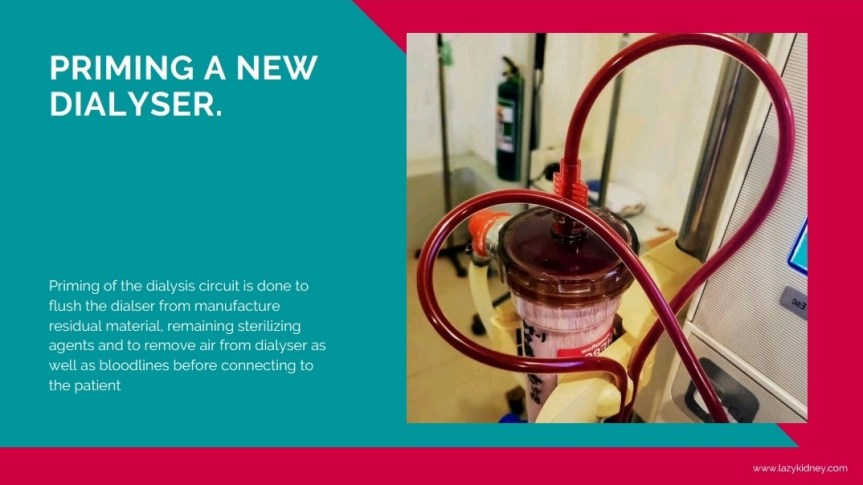
Priming of the dialysis circuit is done to flush the dialser from manufacture residual material, remaining sterilizing agents and to remove air from dialyser as well as bloodlines before connecting to the patient.
Pre-Treatment Evaluation To Be Done In Dialysis Patients Before Starting Hemodialysis.
Pre-treatment assessment provides a foundation for successful treatment. Before the dialysis begins your nephrologists / medical director/dialysis clinical manager will assess your overall health. The assessment includes questions about your medical, personal history and as well as your access examination. The information gathered will helps your nephrologists to form and recommend a treatment plan specific to your needs.
Heart Disease in Dialysis Patients

Although hemodialysis is a safe procedure for removing excess waste materials and fluid in kidney failure patients, the leading cause of death in dialysis patients is sudden heart attack.
How to Properly Check Your Blood Pressure

Blood Pressure is the pressure of circulating blood on the walls of blood vessels. The upper number i.e. systolic blood pressure is the pressure when your heart is beating. The bottom number i.e. diastolic blood pressure is the pressure when your heart is resting between beats.
Iron Supplements In Dialysis Patients

Research is still in progress and there is controversy over which tests of iron status should be used in patients receiving erythropoietin. Many such tests exist, all of which assess different parts of the iron metabolic pathway, and no one single test can be used to give a global picture of iron status. Thus, the serum ferritin gives an approximate indication of iron stores, the transferrin saturation assesses how much iron is circulating in plasma relative to the total iron-binding capacity (transferrin), and the percentage of hypochromic red cells has been advocated as the best means of assessing how much iron is being incorporated into the red cell. Iron stores are said to be normal or near-normal when serum ferritin maintained above 100 µg/L, the transferrin saturation above 20%, and the proportion of hypochromic red cells below 10%.
Monitoring Dialysis Patients On Erythropoietin Therapy

At the start of treatment, patients receiving erythropoietin require fairly close monitoring every 2–4 weeks. As a minimum, the hemoglobin should be measured, there should be an assessment of iron status, and blood pressure should be checked.
How To Treat Anemia By Erythropoietin Therapy?

There are two important reasons to correct anemia in renal failure patients. One is to improve or reverse the symptoms associated with renal anemia, and the second is to seize or reverse the deleterious effect of long-standing anemia on the heart and other organs which lead to improved cardiovascular morbidity and mortality in dialysis patients.
 LazyKidney