A dialysis patient is said to be an acid accumulator for about 44 hrs (Interdialytic period) followed by 4 hrs effective period of retitration (Intradialytic period) which can be accompanied by various degrees of hypoxemia (decreased oxygen in the blood). Hypoxemia occurs because during dialysis Co2 tends to diffuse across the dialyser membrane resulting in decreased Co2 concentration in the blood (pCo2) causing hypoventilation (slow breathing rate) in dialysis patients.
Tag: Chronic Kidney Disease
Intraosseous Access For Hemodialysis

Intraosseous Access is said to be vascular access obtained from the bone which functions similar to the Intravenous access because the bone marrow of long bone contains veins that ultimately drain into the vena cava and this access is said to be a non-collapsible venous access route and considered as a standard alternative to peripheral intravenous access.
Difficult Cannulation Made Easy
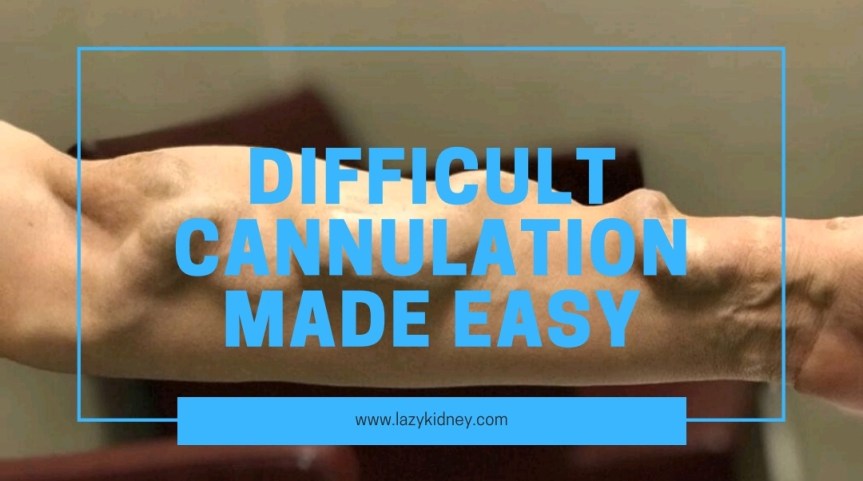
The majority of AVF created does not meet the "Rule of 6s" which makes it difficult to cannulate. And many AVF have prominent bruit and thrill but veins are present deep which makes it difficult to find the vein and cannulate which if not done properly might lead to access-related complications. Because of these reasons the patient has to go back for Central Venous Catheter (CVC) or Arteriovenous Graft (AVG) as their vascular access which is higher in cost and less preferred for maintenance hemodialysis due to its high complication rate compared with AVF. To avoid patients settling with CVC/AVG there are many techniques and procedure which helps make difficult cannulation easy.
How To Overcome Thirst Avoid Fluid Overload And Still Manage To Stay Well Hydrated In Dialysis Patients
Thirst is one of the most powerful urges one can ever have. Especially in dialysis patients, Thirst if not handled in the right way might lead to Fluid Overload which always results in hypertension which damages the heart, causes swelling in arms and legs, puffiness of the face and sometimes breathlessness due to fluid accumulation in the lung cavity making dialysis treatment very difficult.
Taking Care Of Dialysis Catheter
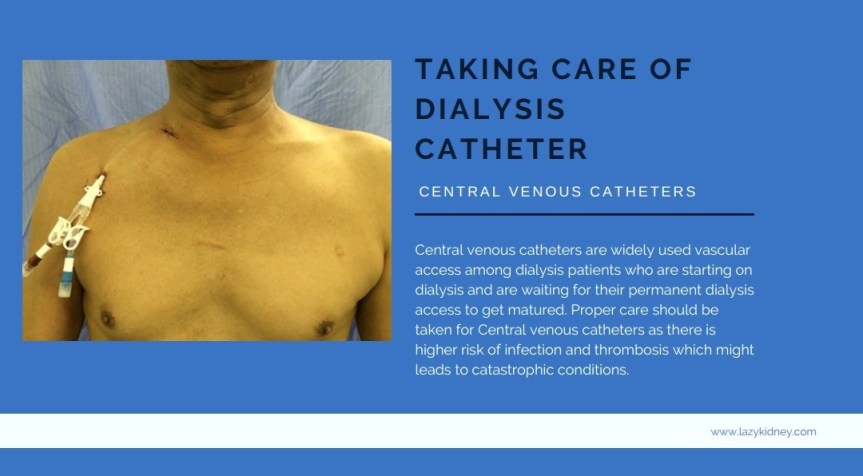
Dialysis catheters are also called as Central Venous Catheters (CVC). CVC are widely used vascular access among dialysis patients who are starting on dialysis and are waiting for their permanent dialysis access to get matured. Proper care should be taken for CVC as there is a higher risk of infection and thrombosis which might lead to catastrophic conditions.
How Does Erythropoietin Affect Heart?

Anemia has intense effects on the cardiovascular system. Many of these effects have said to be improved or reversed following erythropoietin therapy.
Priming a Reuse Dialyser (Reprocessed Dialyser)
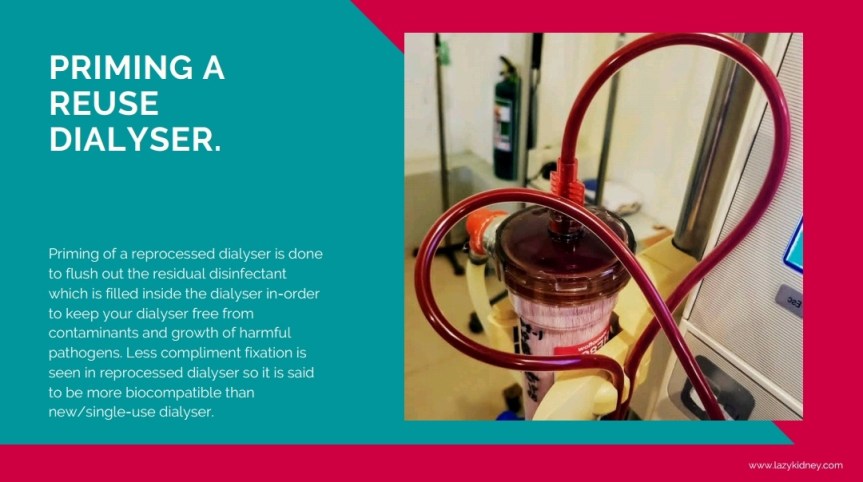
Priming of a reprocessed dialyser is done to flush out the residual disinfectant which is filled inside the dialyser in-order to keep your dialyser free from contaminants and growth of harmful pathogens. Less compliment fixation is seen in reprocessed dialyser so it is said to be more biocompatible than new/single-use dialyser.
Priming a New Dialyser
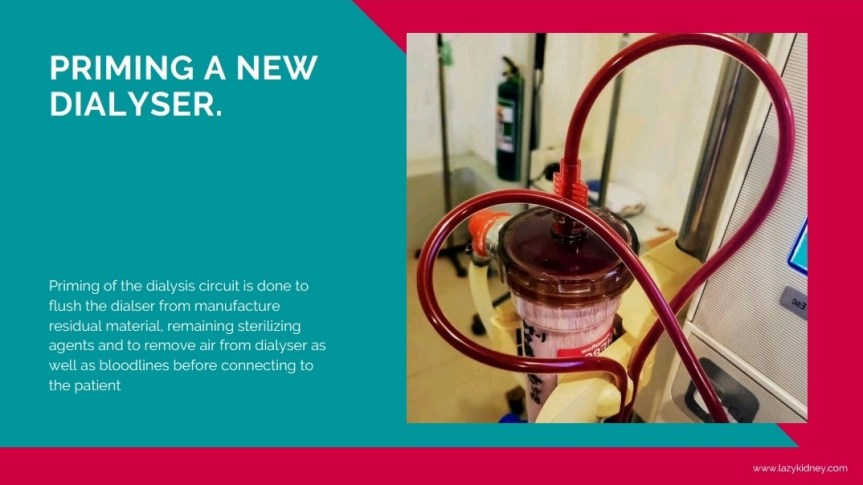
Priming of the dialysis circuit is done to flush the dialser from manufacture residual material, remaining sterilizing agents and to remove air from dialyser as well as bloodlines before connecting to the patient.
Pre-Treatment Evaluation To Be Done In Dialysis Patients Before Starting Hemodialysis.
Pre-treatment assessment provides a foundation for successful treatment. Before the dialysis begins your nephrologists / medical director/dialysis clinical manager will assess your overall health. The assessment includes questions about your medical, personal history and as well as your access examination. The information gathered will helps your nephrologists to form and recommend a treatment plan specific to your needs.
Heart Disease in Dialysis Patients
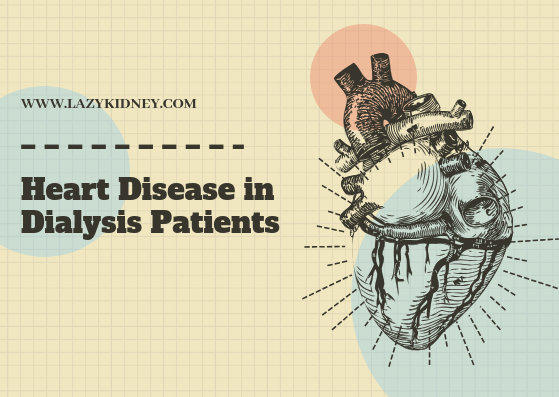
Although hemodialysis is a safe procedure for removing excess waste materials and fluid in kidney failure patients, the leading cause of death in dialysis patients is sudden heart attack.
 LazyKidney