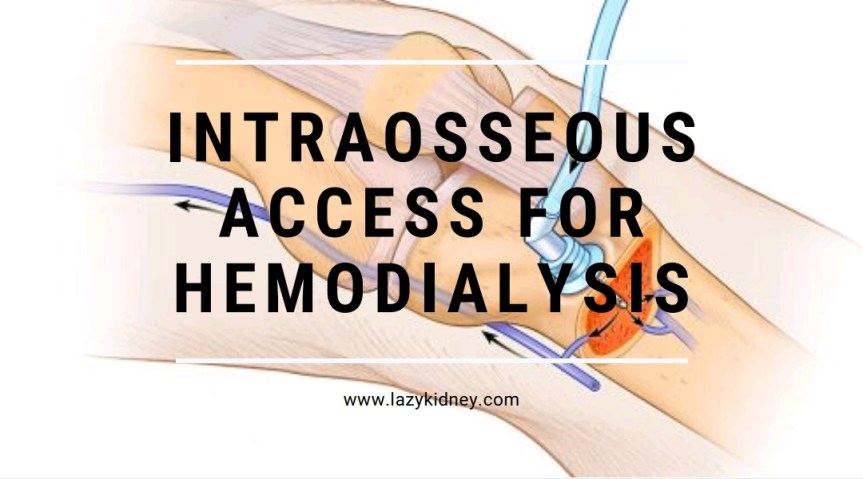
Intraosseous Access is said to be vascular access obtained from the bone which functions similar to the Intravenous access because the bone marrow of long bone contains veins that ultimately drain into the vena cava and this access is said to be a non-collapsible venous access route and considered as a standard alternative to peripheral intravenous access.
Tag: AVF
Difficult Cannulation Made Easy
The majority of AVF created does not meet the "Rule of 6s" which makes it difficult to cannulate. And many AVF have prominent bruit and thrill but veins are present deep which makes it difficult to find the vein and cannulate which if not done properly might lead to access-related complications. Because of these reasons the patient has to go back for Central Venous Catheter (CVC) or Arteriovenous Graft (AVG) as their vascular access which is higher in cost and less preferred for maintenance hemodialysis due to its high complication rate compared with AVF. To avoid patients settling with CVC/AVG there are many techniques and procedure which helps make difficult cannulation easy.
Anatomy of a Dialysis Needle
As the prescription of all dialysis patients is individualized, the needle choices should also be individualized to make dialysis treatment more effective. There are different types of AVF needles available with different specifications that play their role to meet the dialysis demands.
Simple Techniques To Stop Bleeding From A Mature Arteriovenous Fistula & Graft
Acute blood loss through vascular access can be a life-threatening problem, blood loss through Arteriovenous Fistula (AVF) & Graft can be from aneurysms, stenosis and subsequent rupture, infection, trauma, suicide and use of anticoagulants and antiplatelet drugs.
Simple Tests to Detect Serious Arteriovenous Fistula Complications in Hemodialysis Patients
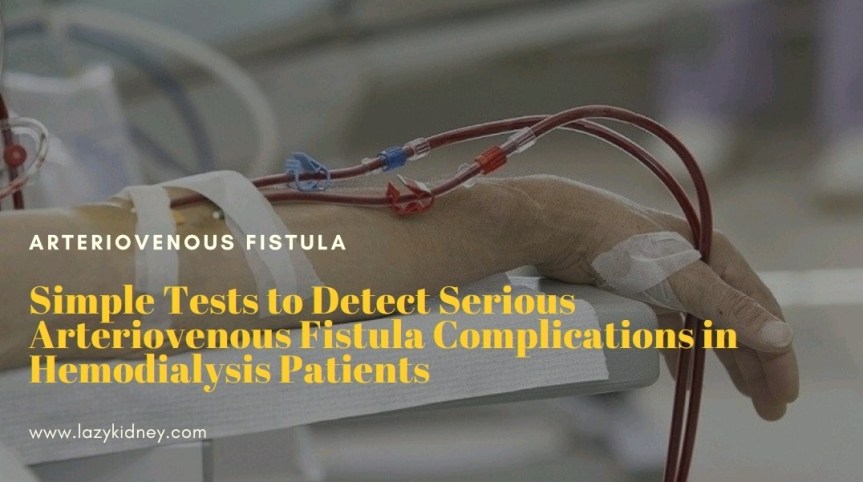
The complication rate of Arteriovenous fistula (AVF) is low compared with Arteriovenous graft and Central venous catheters. Still, the most common complications associated with a mature hemodialysis arteriovenous fistula are an aneurysm, fistula thrombosis, infection, stenotic vascular lesions, access recirculation, and extremity ischemia.
8 Methods To Inspect An AV Fistula

Physical examination is the best method to inspect and detect common problems associated with an arteriovenous fistula (AVF). Physical examinations of AVF should be done on every Hemodialysis treatment, if not at least once a week. Inspection of the access arm should not be neglected.
Do You Think Your AV Fistula Is Healthy? Here is something you need to know about your AV Fistula.
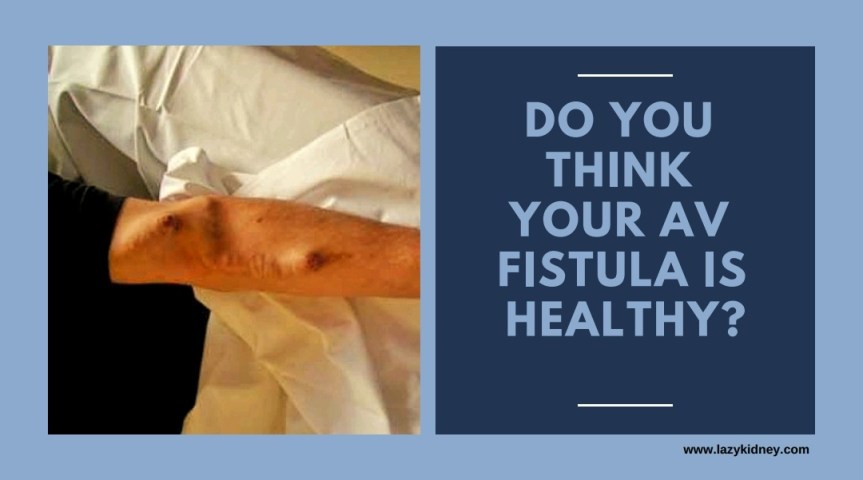
Arteriovenous Fistula (AV Fistula) is known as the lifeline for dialysis patients. AV Fistula is nothing but a connection between an arterial blood line and a venous blood line inside your body. Creating an AV fistula is a minor surgical procedure where a vascular surgeon will connect an artery and a vein together with relatively small incision of about 1 – 1 ½ inch usually in the forearm or upper arm.
 LazyKidney