We have noticed many times that our patient shows up to the unit with slight to heavy breathlessness which subsides within a few minutes of dialysis. You might be thinking fluid overload is the reason behind breathless. Yes, you are right! But there is a lot more than fluid overload that causes breathlessness that we need to consider in dialysis patients.
The lungs in dialysis patients are liable to suffer from any disturbance in water and electrolyte balance. The difficulty in breathing is due to anatomical and physiological changes that happen without any signs and symptoms especially blocking of pulmonary vessels and small bronchi due to calcification is very common and is highly asymptomatic. To diagnose this, Pulmonary Function tests to be done to check vital capacity, defect in gas transfer and severity of lung calcification in dialysis patients regularly is highly recommended.
Dialysis patients even without any cardiopulmonary symptoms such as breathlessness, chest pain, etc accumulate fluids in the lungs which are removed during dialysis.
Pulmonary Edema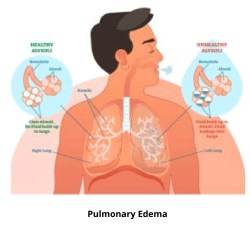
The most important cause of fluid accumulation in lungs i.e. Pulmonary Edema is due to non-compliance with fluid restriction, and pulmonary edema is common in dialysis patients due to a high uremic environment which causes cardiopulmonary abnormalities like a left ventricular failure and pulmonary vessel obstruction leading to accumulation of fluid in the lungs.
Treatment of pulmonary edema includes emergency dialysis with ultrafiltration (removal of fluid). Supportive measures such as oxygen supplementation, raising the upper body, nitrates and morphine have to be undertaken until dialysis treatment can be initiated. Occasionally, the patient presents with severe respiratory distress requiring sedation, intubation, and mechanical ventilation. Once dialysis treatment has initiated the symptoms gradually improve over a short period.
Pleural Effusion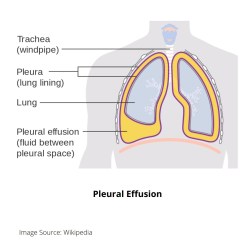
Pleural Effusion is also most common in dialysis patients and can be easily resolved with continuous adequate dialysis over several weeks to months. Pleural effusion is the buildup of excess fluid between the layers of the pleura (covering of lung) and the inside of the chest cavity which acts to lubricate and facilitate breathing.
Pleural Effusion can occur without fluid overload and any apparent cause in dialysis patients. In few patients the pleural fluid becomes gelatinous and thick fibrous peel develops, this is known as “Fibrous Uremic Pleuritis”. Other than this, catheter-related superior vena cava obstruction or subclavian venous catheter leak are related to developing pleural effusion in dialysis patients. In patients undergoing Peritoneal Dialysis, pleural effusion can result from leakage of dialysate through a small often congenital diaphragmatic defect. When this persists surgical correction or alternative mode of dialysis therapy should be considered.
Pulmonary Embolism
Pulmonary Embolism i.e. blockage of an artery in the lungs by a blood clot can also be seen but rare in dialysis patients. An episode of cough, breathlessness, hypotension, chest pain and cough up of blood after removal of dialysis catheter suggests pulmonary embolism or lung infarction.
A fibrin sheath forms around the catheter surface within few days after its placement, this sheath will be stripped off during a catheter replacement procedure and remains in the subcutaneous tunnel or the vascular bed without causing much discomfort in most patients. Diagnosis will be based on clinical symptoms, laboratory evaluation, electrocardiographic signs, and imaging techniques.
Pulmonary angiography remains a gold standard to treat pulmonary embolism. Other treatment consists of supportive measures and prevention of reoccurrence with un-fractionated heparin or low molecular weight heparin (LMWH).
Sleep Apnea
Sleep Apnea is a serious sleep disorder where the patient feels difficult to breathe during sleep. Sleep apnea is common in dialysis patients and causes arrhythmia and pulmonary hypertension in dialysis patients.
Pulmonary abnormalities during Hemodialysis
Hypoxemia is a condition where an abnormally low level of oxygen in the blood is present. Hypoxemia is seen in nearly 90% of dialysis patients which causes serious complications in cardiopulmonary compromised patients.
Hemodialysis patient is an acid accumulator for 44 hours (non-dialysis period) followed by 4 hours (dialysis period) efficient period of retitration, which can be accompanied by a variable degree of hypoxemia. Hypoxemia occurs because during hemodialysis carbon-dioxide tends to diffuse across the dialyser membrane resulting in decreasing carbon-dioxide concentration in the blood causing hypoventilation in dialysis patients.
Hypoxemia during hemodialysis mainly depends on dialysate composition, alkalization of body fluids and type of dialyser membrane used. Higher the biocompatibility of dialyser membrane and type of dialysate reduces dialysis associated hypoxemia.
Pulmonary abnormality during Peritoneal Dialysis
During Peritoneal dialysis, changes in pulmonary function and gas exchanges are common due to the use of 2 – 3 liters of peritoneal dialysate which causes a significant reduction of total lung capacity because of enlargement of the abdomen.
Lung collapse (atelectasis), pneumonia, bronchial infection, chronic pleural effusion, and hydrothorax are few among various complications that may occur during peritoneal dialysis. Peritoneal dialysis may not be tolerated by patients with chronic obstructive pulmonary disease (COPD) because of increased abdominal pressure in standing position after the instillation of peritoneal dialysate.
Peritoneal dialysis must be discontinued and treated with hemodialysis if any of the mentioned complications are seen.
 LazyKidney