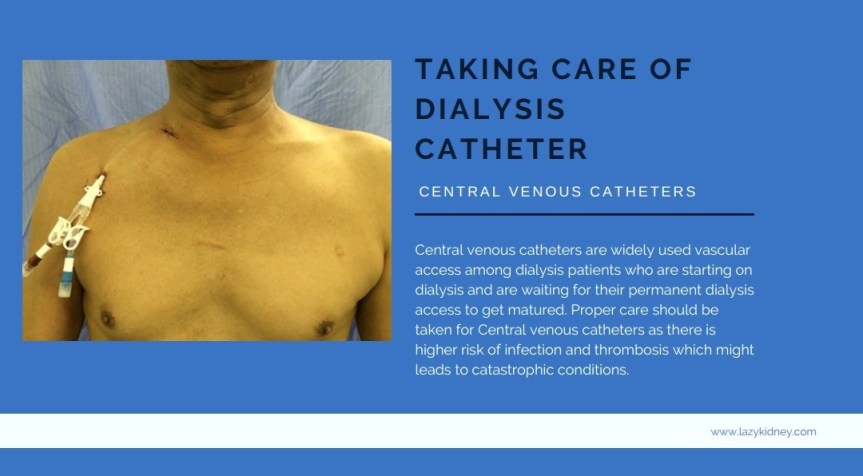
Dialysis catheters are also called as Central Venous Catheters (CVC). CVC are widely used vascular access among dialysis patients who are starting on dialysis and are waiting for their permanent dialysis access to get matured. CVC is a synthetic tube usually placed in a vein in the neck or groin or chest.
Proper care should be taken for CVC as there is a higher risk of infection and thrombosis which might lead to catastrophic conditions.
Here are few key points to always keep in mind when a CVC is hanging out of your body.
- CVC dressing should always be kept dry and in place. Special care should be taken to keep the dressing dry while showering and bathe.
- A clear transparent waterproof dressing that sticks to catheter and skin around it is recommended as it is easy to see the signs of infection and allows taking shower and bathing without wetting the catheter.
- Never remove the cap on the end of the catheter. Caps and clamps of the catheter should be kept tightly closed when not being used for dialysis.
- Mask over the nose and mouth should be worn by both patient and professional whenever the catheter is opened to prevent bacteria from entering the catheter and into the bloodstream.
- If the area around the catheter feels sour or looks red and signs of fever, chills, and pain in the exit site to be reported to the dialysis unit immediately.
- Always keep an emergency dressing kit at home in case you need to change your dressing in between treatment days. The emergency kit should also contain a spare set of clamps and sterile catheter caps.
If the outer dressing becomes wet or lifts away from the skin when at home, it needs to be changed. Before changing the dressing one should;
- Wash hands before touching the catheter dressing
- Peel off the outer dressing only
- Wash hands again
- Apply new dressing and wrap gauze around the catheter and tape to prevent the tubes from touching the skin surface.
There are some scenarios you might come across with CVC, these scenarios are rare but it’s a good idea to know what to do if a problem does occur.
When Catheter lumen is pulled
Check the exit site for bleeding. If bleeding, give a gentle pressure on the bleeding site and change the dressing. Don’t try to push the catheter back inside as this might damage the vein permanently. Report this to the dialysis unit immediately.
When the catheter cap comes off 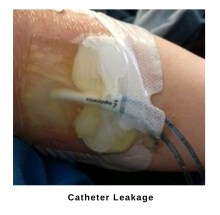
Clean the end of the line with an alcohol swab and replace it with a clean cap from your emergency dressing kit.
When the catheter falls out
Cover the exit with gauze or dressing pad, pressure to be applied on the site until bleeding stops. Stay calm and visit dialysis unit as soon as possible.
When the catheter is cut or leaking 
Clamp the tube above the leak using the spare clamp from your emergency dressing kit. Report this to the dialysis unit as it needs immediate repair.
When the exit site looks infected
Contact your dialysis unit immediately, a swab of catheter exit site will be taken for culture and you will be put on antibiotics.
 LazyKidney