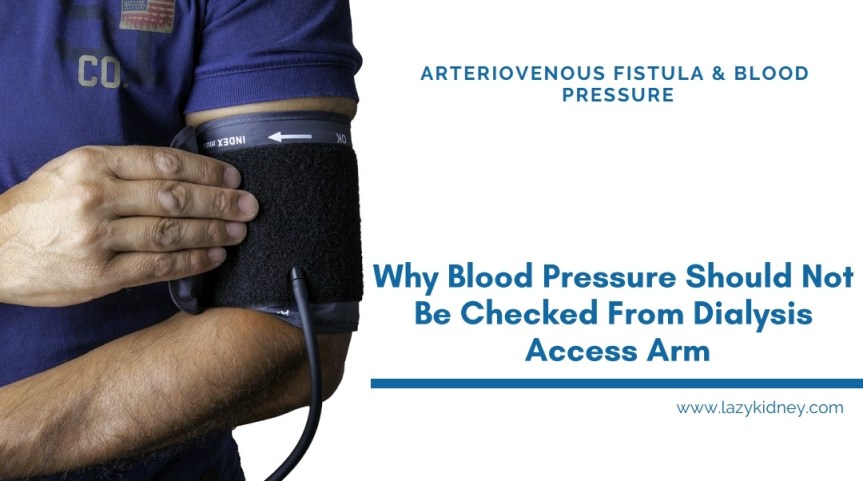
Blood pressure is the pressure of blood on the walls of arteries as the heart pumps it around the body. Blood pressure, especially in dialysis patients, will be abnormal due to many factors that include abnormal blood composition and hormonal dysfunction that requires repeated measurement of blood pressure in these individuals.
It was 6 years back the day I entered the dialysis unit first thing I have told not to measure blood pressure from the dialysis access arm. Once I almost wrapped a BP cuff on dialysis access arm by mistake and the patient didn’t let me near her for a long period of time.
 If you are a student or trainee you will be told not to measure blood pressure from dialysis access arm from dialysis nurses, dialysis therapists, nephrologists and even from the patient themselves. But, have you ever wondered or asked them back why you are not supposed to measure blood pressure from the dialysis access arm? If asked, did you get any answers from your superiors? Please share it with us in the comment section. If not, read along.
Blood pressure in dialysis patients should be monitored regularly especially during hemodialysis due to the removal of fluid results in the reduction in blood volume and mechanical alteration of blood pressure from the blood pump of the hemodialysis machine.
We are checking blood pressure from the non-dialysis arm but what happens if we check the blood pressure from the dialysis access arm?
Monitoring Blood pressure from the dialysis arm, while inflating the cuff induces compression of blood vessels that might lead to thrombosis, coagulation and even compromise the perfusion of the hand especially in a condition of low blood pressure.
When fistula or graft is compressed it can get damaged that might result in clot forcing the patient to undergo thrombectomy to angioplasty procedure to get rid of the clot.
A case was reported that a patient complained of immediate pain in fistula arm and fistula thrombosis was seen on the next day when blood pressure was measured from automated blood pressure meter on dialysis arm.
Most of all, just say you have already wrapped and inflated the cuff and trying to hear korotkoff sounds. Do you think you can hear it? No, you can’t, because one couldn’t hear the korotkoff sounds over the sound of the fistula bruit. And you cannot able to get the normal pulse in the fistula arm. Plus the blood pressure may not be accurate due to various circulatory reasons.
And there are increased chances of stenosis and thrombosis if blood pressure is measured repeatedly from the mature fistula.
But one thing I always wondered, “ whether thrombosis, coagulation, fistula damage could really occur from just 15-30 seconds of occlusion? ”
There are chances because of the anatomical changes in the arteriovenous fistula causes increased chance of any trauma that can cause damage to the fragile area i.e. anastomosis of artery and vein. Because of this anatomical difference, there is difficulty hearing the korotkoff sounds at the proper times causing invalid readings.
It is not prohibited to measure blood pressure from the dialysis access arm, it is said not to measure blood pressure from the dialysis access arm only because there is a majority of the reason that it might damage the arteriovenous fistula which is said to be a lifeline of the dialysis patient. And also if you try to measure you can’t able to get the proper pulse and korotkoff sounds resulting in invalid readings.
“ Of course the dialysis access arm is useable but it should not be preferential. ”
 LazyKidney