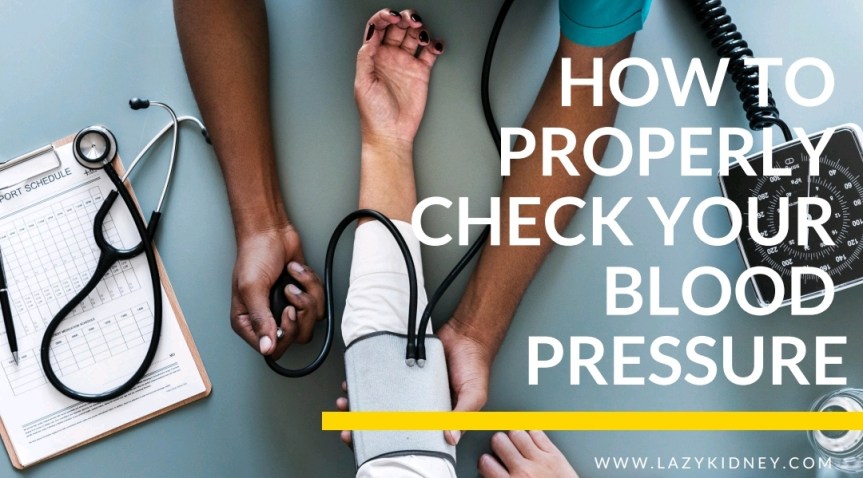
Blood Pressure is the pressure of circulating blood on the walls of blood vessels. The upper number i.e. systolic blood pressure is the pressure when your heart is beating. The bottom number i.e. diastolic blood pressure is the pressure when your heart is resting between beats.
Avoid eating, drinking, smoking, exercising and taking drugs that affect the blood pressure before one hour.
Avoid coffee as it contains caffeine that drastically increases blood pressure and smoking or any other unprescribed drug with sympathomimetic activity (activates the sympathetic nervous system) on the day of the measuring blood pressure.
Don’t involve in any painful procedure and sit calmly for a few minutes in a comfortable position.
Don’t check blood pressure on an Arteriovenous Fistula (AV Fistula) or Arteriovenous Graft (AV Graft) arm, that arm should be avoided for checking your blood pressure.
The arm should be in a resting position and raised while checking blood pressure if required so that brachial artery is at the same height as the heart. If the arm is held too high the measurement will be inaccurately lowered and if the arm is held too low it will be inaccurately high.
Select your cuff size accordingly which comes along with the blood pressure apparatus. Varieties of cuff size available are:
- Pediatric cuff :
Cuff width: 2/3 length of upper arm
Cuff length: Bladder nearly encircles the arm
- Adult cuff :
Cuff width: 40% of limb circumference
Cuff length: 80% of limbs circumference
- Indications for a large cuff or thigh cuff:
Upper arm circumference >34cm
- Indications for forearm cuff:
Upper arm circumference >50cm
If the cuff size is too small the readings will be artificially elevated, if the cuff size is too big the readings will be artificially lowered.
Wrap the cuff around the bare arm slightly flexed at the elbow and avoid wrapping above clothes as it artificially raises blood pressure.
Cuff should be placed 2.5 cm above antecubital fossa (elbow pit) inflatable bladder should be over the brachial artery.
In a manual measuring blood pressure apparatus the manometer scale should be at eye level and the column should be vertical.
Feel for a pulse from the artery at antecubital fossa (elbow pit)
Place the stethoscope head directly over the artery you found.
In a manual blood pressure apparatus pump the squeeze bulb to inflate the cuff until you no longer feel the pulse.
If you hear any sound, pump up to 10-20 mmHg more.
Deflate cuff slowly at a rate of 2-3 mmHg per second until you can again detect a radial pulse
Listen for auditory vibrations from artery “bump, bump, bump” (this is called the sound of Korotkoff)
Systolic blood pressure is the pressure at which you can first hear the pulse.
Diastolic blood pressure is the last pressure at which you can still hear the pulse.
If you wish to repeat the BP measurement you should allow the cuff to completely deflate, permit any venous congestion in the arm to resolve and then repeat a minute or so later.
If the BP is surprisingly high or low, repeat the measurement. Repeated blood pressure measurement can be uncomfortable.
Note down your blood pressure and speak about it with your doctor if you find your blood pressure is fluctuating so much.
In an individual who does not have AVF or AVG on both arms blood pressure should be checked in both arms and one lower extremity.
Normal Blood pressure: 100/60 to 140/90.
Your blood pressure is abnormal if you find any of the following,
Hypotension (blood pressure below normal): may be indicated by a systolic pressure lower than 90, or a pressure 25 mmHg lower than usual.
Hypertension: High blood pressure greater than 140/90.
Pre-Hypertension: systolic pressure consistently 120 to 140, or diastolic 80 to 90.
Stage 1 Hypertension: systolic pressure consistently 140 to 160, or diastolic 90 to 100.
Stage 2 Hypertension: systolic pressure consistently 160 or over, or diastolic 100 or over.
If you find your Blood Pressure abnormal consult your doctor as soon as possible.
 LazyKidney