
Research is still in progress and there is controversy over which tests of iron status should be used in patients receiving erythropoietin. Many such tests exist, all of which assess different parts of the iron metabolic pathway, and no one single test can be used to give a global picture of iron status. Thus, the serum ferritin gives an approximate indication of iron stores, the transferrin saturation assesses how much iron is circulating in plasma relative to the total iron-binding capacity (transferrin), and the percentage of hypochromic red cells has been advocated as the best means of assessing how much iron is being incorporated into the red cell. Iron stores are said to be normal or near-normal when serum ferritin maintained above 100 µg/L, the transferrin saturation above 20%, and the proportion of hypochromic red cells below 10%.
Month: May 2018
Monitoring Dialysis Patients On Erythropoietin Therapy

At the start of treatment, patients receiving erythropoietin require fairly close monitoring every 2–4 weeks. As a minimum, the hemoglobin should be measured, there should be an assessment of iron status, and blood pressure should be checked.
How To Treat Anemia By Erythropoietin Therapy?

There are two important reasons to correct anemia in renal failure patients. One is to improve or reverse the symptoms associated with renal anemia, and the second is to seize or reverse the deleterious effect of long-standing anemia on the heart and other organs which lead to improved cardiovascular morbidity and mortality in dialysis patients.
Action Of Erythropoietin In Dialysis Patients

Erythropoietin therapy is one of the greatest inventions in Nephrology and it changed the way we treat anemic patients, which we were only dependent on blood transfusions in the past. Erythropoietin therapy is the easiest way to treat anemia in CKD
Erythropoietin Therapy
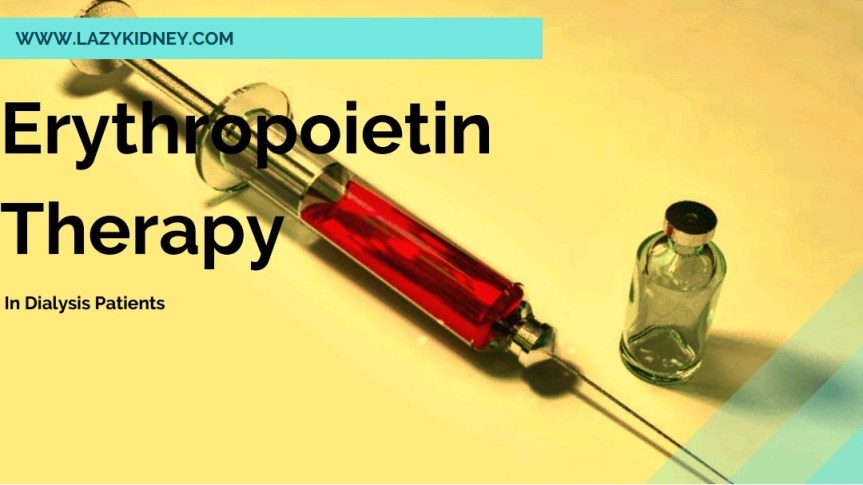
Erythropoietin therapy is one of the greatest inventions in Nephrology and it changed the way we treat anemic patients, which we were only dependent on blood transfusions in the past. Erythropoietin is a 165 amino acid secreted glycoprotein. Recombinant erythropoietin is available in two forms α-epoetin and β-epoetin and Darbepoetin is a longer acting erythropoietin with the half-life approximately three folds longer than recombinant erythropoietin. 1µg darbepoetin is equal to 200 IU OF erythropoietin.This has been achieved by adding two extra N – linked carbohydrate side – chains to the erythropoietin molecule. As a result, darbepoetin requires less frequent dosage, usually once a week or once in every two weeks and sometimes only once a month in stable hemodialysis patients.
Management of Anemia in Chronic Kidney Disease (CKD)

There are two important reasons to correct anemia in renal failure patients. One is to improve or reverse the symptoms associated with renal anemia, and the second is to seize or reverse the deleterious effect of long-standing anemia on the heart and other organs which lead to improved cardiovascular morbidity and mortality in dialysis patients.
Development Of Anemia In Dialysis Patients

Anemia is one of the major Hematological complications in Chronic Kidney Disease (CKD). As renal function declines, there is a progressive worsening of anemia, which becomes clear once serum creatinine rises above 300 µmol/L or GFR falls below 30 ml/min/1.73m² and its major cause is the loss of cells in the kidney responsible for the synthesis and secretion of erythropoietin.
Anemia In Dialysis Patients
Anemia is one of the major Hematological complications in Chronic Kidney Disease (CKD). Although anemia in CKD is multifactorial by far the main cause of anemia is due to inadequate production of hormone Erythropoietin by the diseased kidneys.
 LazyKidney